

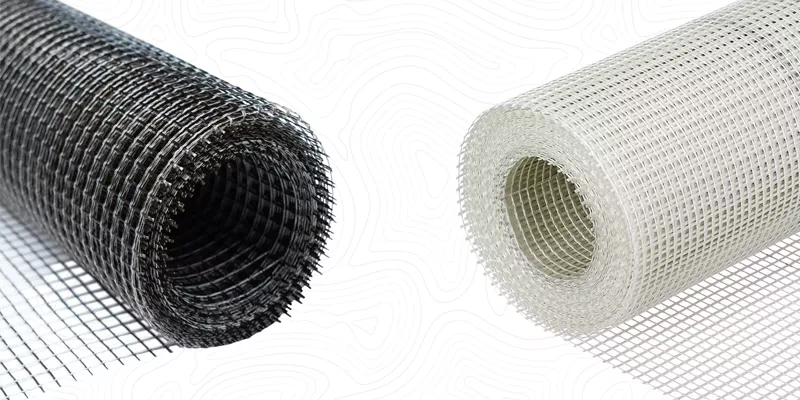
Basalt mesh fabric, used in structural strengthening, insulation, and restoration projects, is preferred to increase the durability of structural elements and protect the structure against external factors. There are some fundamental differences between basalt mesh and glass fiber mesh fabrics, the two most commonly used materials in this field.
1. Higher Mechanical Strength
Basalt mesh fabrics are obtained by melting volcanic basalt stone and turning it into fibers. This structure provides higher tensile and breaking strength compared to fiberglass fabrics. Its preference especially in structural elements that bear heavy loads ensures a long lifespan for the structure.
2. High Temperature Resistance
Basalt fibers can maintain their form at temperatures between -260°C and +800°C. Glass mesh fabrics, on the other hand, may deform within this temperature range. Thanks to this feature, basalt mesh stands out in fire-resistant building solutions.
3. Resistance to Alkaline Environments
Basalt mesh fabrics are more resistant to alkalis compared to glass fiber. This property ensures that the product lasts for a long time, especially when used in reinforced concrete structures or environments exposed to chemicals.
4. Long Service Life and Low Maintenance Requirement
Basalt mesh is more resistant to harsh environmental conditions. Moisture, chemical effects, and deformations that occur over time are seen much less in basalt fibers. This reduces the maintenance cost of the structural system and offers longer-lasting solutions.
5. Natural and Environmentally Friendly Material
Basalt fiber is a completely natural, non-toxic, and recyclable material. It has a more environmentally friendly production process compared to glass fiber. It provides a major advantage in projects targeting green building certifications.
6. Lighter and Easier to Apply
Despite their high strength, basalt mesh fabrics are very lightweight materials. This feature facilitates workmanship during application and shortens the working time.
Basalt mesh fabrics offer greater strength, temperature tolerance, and service life compared to fiberglass fabrics in the field of structural strengthening and construction. Especially in strengthening projects in earthquake-prone regions and in areas that require fire safety, the use of basalt mesh provides safer and more permanent solutions.
High Strength
Basalt mesh demonstrates higher strength compared to fiberglass mesh fabrics. It can withstand static and dynamic loads 3–4 times greater than glass meshes without deformation.
Fiberglass geogrids exhibit more brittle behavior under heavy loads.
Better Thermal Resistance
The operating temperature range of basalt geogrid is between -60 and +80°C,
whereas fiberglass loses its performance at 0°C. This makes basalt geogrid a more preferred product for working in harsh weather conditions.