Carbon fiber is an extremely strong, rigid, and lightweight material, and it is superior to traditional metal materials in terms of durability.
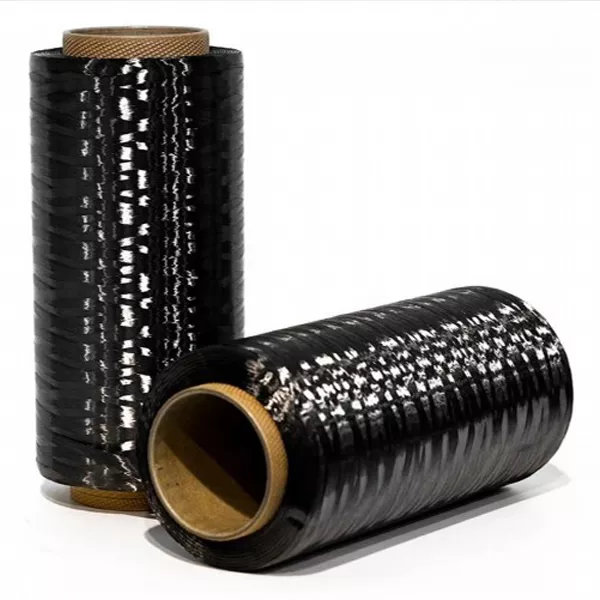
Technically, it is known as a fiber containing at least 95% interconnected carbon atoms. It consists of extremely fine carbon filaments (5–7 µ in diameter) that are even thinner than human hair. The filaments can be twisted together like yarn. The yarns can be woven together like fabric, which is used in the production of composite parts. Carbon fibers are produced in bundles (tows) ranging from 1,000 filaments (1k), 3k, 6k, 12k, 24k, 50k, etc.
Carbon fiber is one of the modern structural reinforcement materials. This thread-like material, thinner than human hair yet many times stronger than steel, is a fundamental building block in many advanced technologies today. So, what exactly does this black, shiny fiber do, and why is it so special?
The main function of carbon fiber is to create structures that are much lighter and at the same time much stronger than traditional metals, thanks to its exceptional strength-to-weight ratio. It is usually combined with special resins (such as epoxy) to form materials called “carbon fiber composites.” These composites combine the high tensile strength of the fiber with the molding and bonding properties of the resin.
Compared to metals, it is far more resistant to chemical reactions and corrosion. Thanks to this property, it is preferred in areas exposed to harsh environmental conditions, such as marine applications (yacht and boat building) and wind turbine blades. In the long term, it reduces maintenance costs. In some applications, the natural flexibility of carbon fiber and its ability to dampen vibrations are also utilized. This is important, for example, for shock absorption in sports equipment or vibration control in precision machines.
The purpose of carbon fiber is to significantly reduce the weight of a product or structure while simultaneously increasing its durability and performance. Thanks to this capability, it will continue to stand out in future technologies in every field where lightness and strength are required. In many aspects of our lives, we benefit from these advantages of carbon fiber, even if we are not aware of it.
Carbon fiber is exceptionally resistant to water, salt, and many chemicals. Thanks to this property, it is also frequently preferred in the maritime industry. While materials like steel can rust over time, carbon fiber does not corrode and retains its properties for many years. This significantly reduces maintenance costs.
The corrosion resistance being so high allows carbon fiber to be used as a long-term solution in infrastructure projects (for example, in bridge reinforcement works). In places where traditional materials wear out, carbon fiber continues to function for years without deterioration.
Another advantage of carbon fiber is its resistance to heat. It can maintain its structural integrity even in environments exposed to high temperatures. In addition, since it is electrically insulating, it is also used for the protection of electronic components.
In areas such as industrial furnace components and the outer layers of spacecraft, the heat-resistant structure of carbon fiber offers a great advantage. At the same time, since this material does not become brittle at low temperatures, it can even be used in polar conditions.
Carbon fiber fabric is an advanced structural reinforcement material that revolutionizes today’s technology by combining lightness with incredible durability. It is generally combined with plastic resins to form composite materials, and has thus become indispensable in many sectors.
In earthquake-prone regions or for the strengthening of old structures, carbon fiber fabric is among the most commonly used product groups. Structural elements such as reinforced concrete beams, columns, and bridges have their load-bearing capacities increased and their earthquake resistance enhanced by strengthening them with carbon fiber fabric strips or fabrics. This method is a more cost-effective and faster-to-apply solution compared to traditional strengthening methods. As Karbontech, we provide professional responses to expectations in structural reinforcement application materials with first-class quality materials and workmanship.
Carbon fiber is basically formed by arranging carbon atoms into long, thin fibers, which are then combined with resins to create composite materials. This combination gives the resulting material both incredible lightness and high strength.
In structural reinforcement projects, carbon fiber is being used more and more. Especially in earthquake-prone areas, structural elements such as reinforced concrete beams, columns, and bridges are strengthened with carbon fiber strips or fabrics. This method increases the load-bearing capacity and seismic resistance of structures, allowing for the construction of safer buildings.